
A New Molecular Layer for Precision Neurology

Circular RNA is an emerging class of blood-based biomarkers that provide a broader view of brain biology.

header graphic of brain image line drawing with networking dots connected throughout the image. faint line waves stretch across the screen behind it with a cluster of networking paths and dots to the left and the right of the brain image.

What is Circular RNA?

Circular RNA (circRNA) is a naturally occurring class of RNA molecules, formed in the brain through a process known as back-splicing. Unlike linear RNA, circRNAs form a continuous closed-loop structure without free ends.

This unique architecture contributes to their exceptional stability, making them an ideal biomarker for investigating complex biological processes.

Once considered a rare byproduct of gene expression, circRNAs are now recognized as abundant, biologically relevant molecules involved in gene regulation, cellular communication, and neurological function.
Key Biological Properties of Circular RNA

The unique biological properties of circRNAs make them ideal blood-based biomarkers for investigating the complex biology of neurological diseases.

Dynamic Expression

CircRNA expression changes in response to biological state over time, providing insight into processes associated with brain health, dysfunction, and disease progression.

Multi-Pathway Biology

CircRNAs reflect signals across interconnected disease pathways rather than isolated markers, providing a broader and more comprehensive view of brain biology.

Brain-Derived

CircRNAs are naturally enriched in the brain, providing access to biologically relevant molecular information associated with neurological function and disease.

Stable Structure

The circular structure of circRNA contributes to exceptional stability and persistence, supporting reliable measurement and detection.

Detected in Blood

CircRNAs can be detected in blood, providing access to molecualr information associated with brain health and disease.

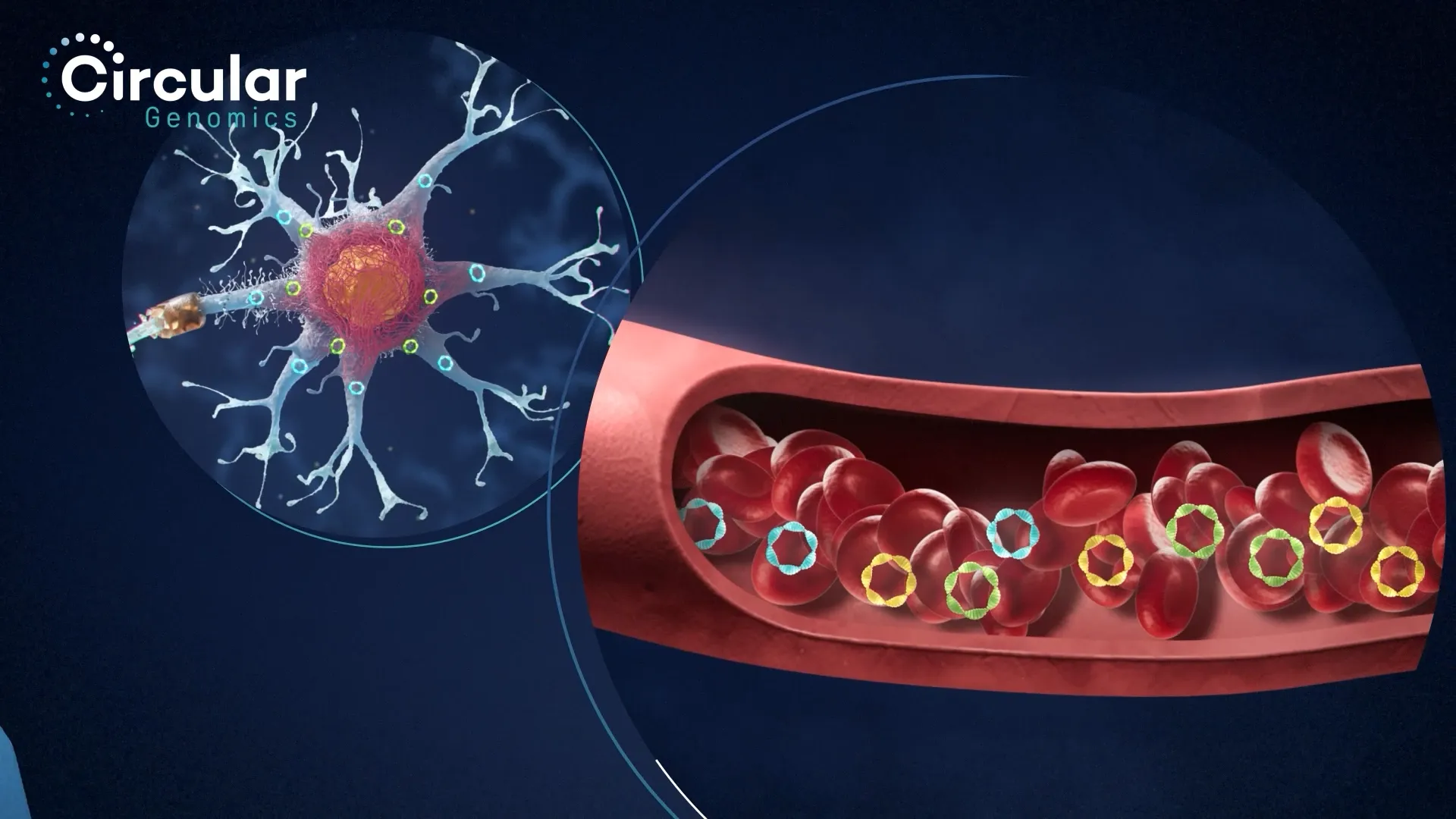
illustration of neuron with another illustration of blood flowing with circular RNA in its path

Brain Biology to Blood-Based Insights

CircRNAs provide a unique connection between the brain and blood.

Packaged within extracelluar besicles, circRNAs cross the blood-brain barrier and enter the peripheral blood, where they can be readily detected.

These unique biological properties enable investigation of brain diseases through a simple sample of blood.